Beautiful Gallery Wrapping by Experts.
Whether it is an original painting, a rolled canvas that was shipped from overseas, or any type of printed canvas, proper stretching is essential for turning a loose canvas into a hangable piece. We stretch every canvas with sturdy custom wooden stretchers, on site, with even tension. We always use cross bracing to prevent stretched canvases from developing an hourglass shape.
Types of Canvas Stretching
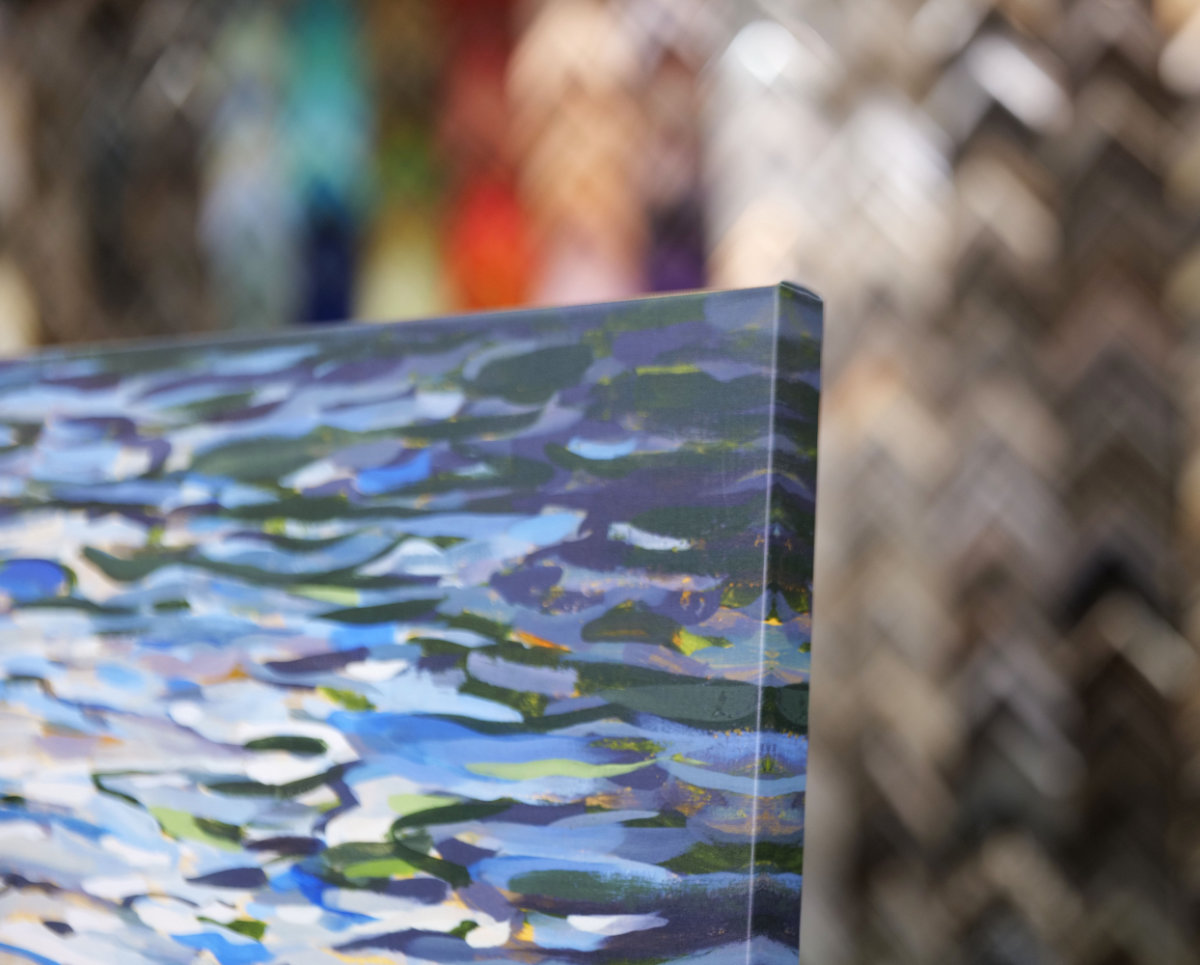
There are two main ways to stretch a canvas – studio (standard) wrap, or gallery wrap. A studio wrap is when a canvas is stretched over thinner bars and stapled on the side. A gallery wrap is when the canvas is stretched around the bars and is stapled on the back, giving it a clean, contemporary look. Note: we DO NOT do studio wraps. All of our canvases are gallery wrapped.
Another slight variation is what is referred to as a museum wrap. This is essentially the same as a gallery wrap, but some people use this term to differentiate the aesthetic variation. The difference: a normal gallery wrap is when the art wraps around the side, whereas a museum wrap uses a mirrored border or solid color so the image remains entirely on the front. Which method we use mainly depends on the canvas we’re stretching. Museum style is often done with printed canvases, because creating a mirrored edge can be done digitally.
Re-stretching
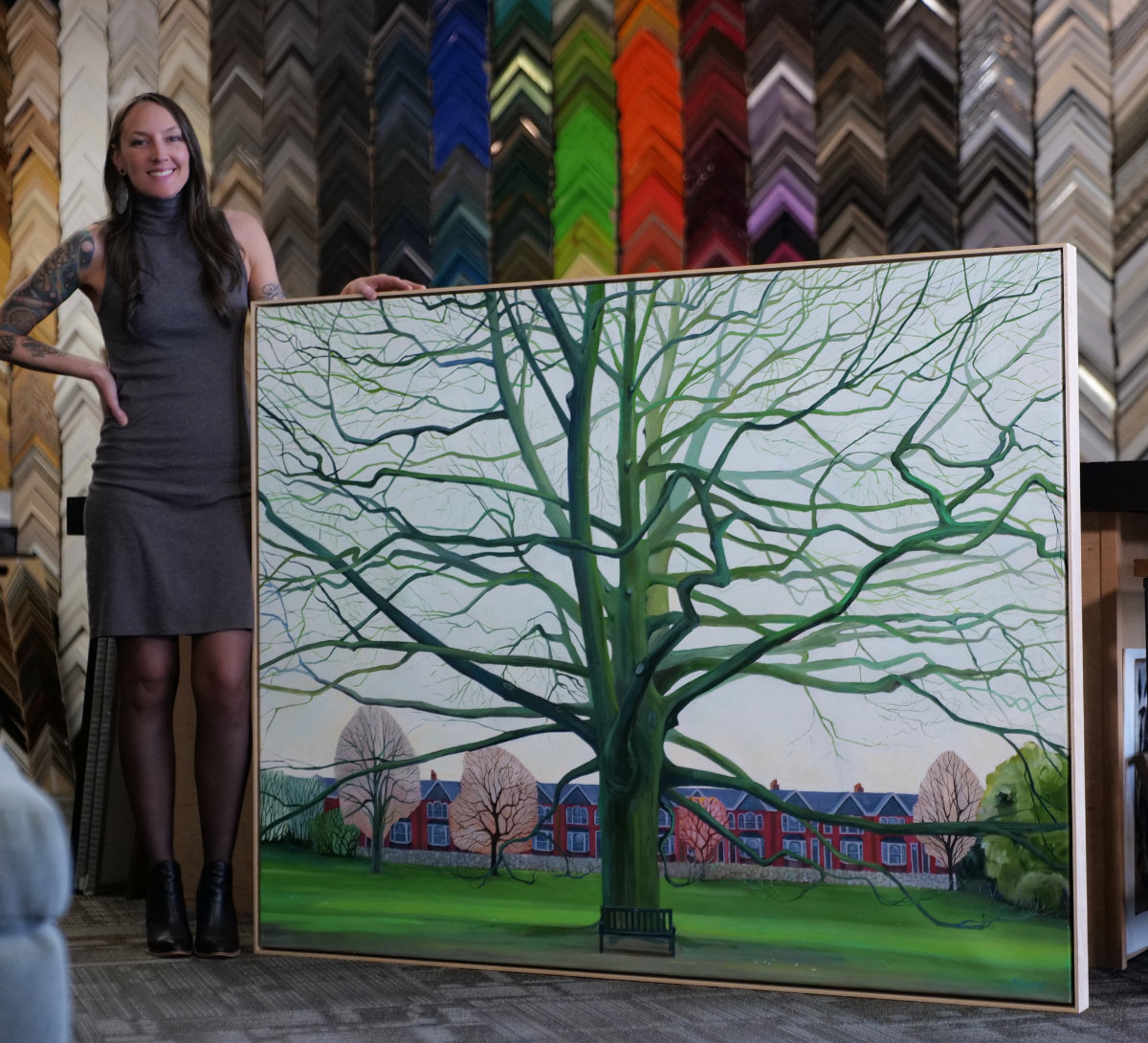
We see a lot of canvases that are poorly stretched, often DIY, which have various attributes such as sagging, warping, hourglass shape, misshaped stretcher bars, or are simply falling apart. Re-stretching a canvas can fix those issues, and revitalize your art.
The best way to know what’s going to work best for your art, and whether or not there may be potential issues with re-stretching a canvas, is to bring it into our shop. Our team will inspect it, give you an accurate quote, and assess what the best options are.
Canvas Mounting
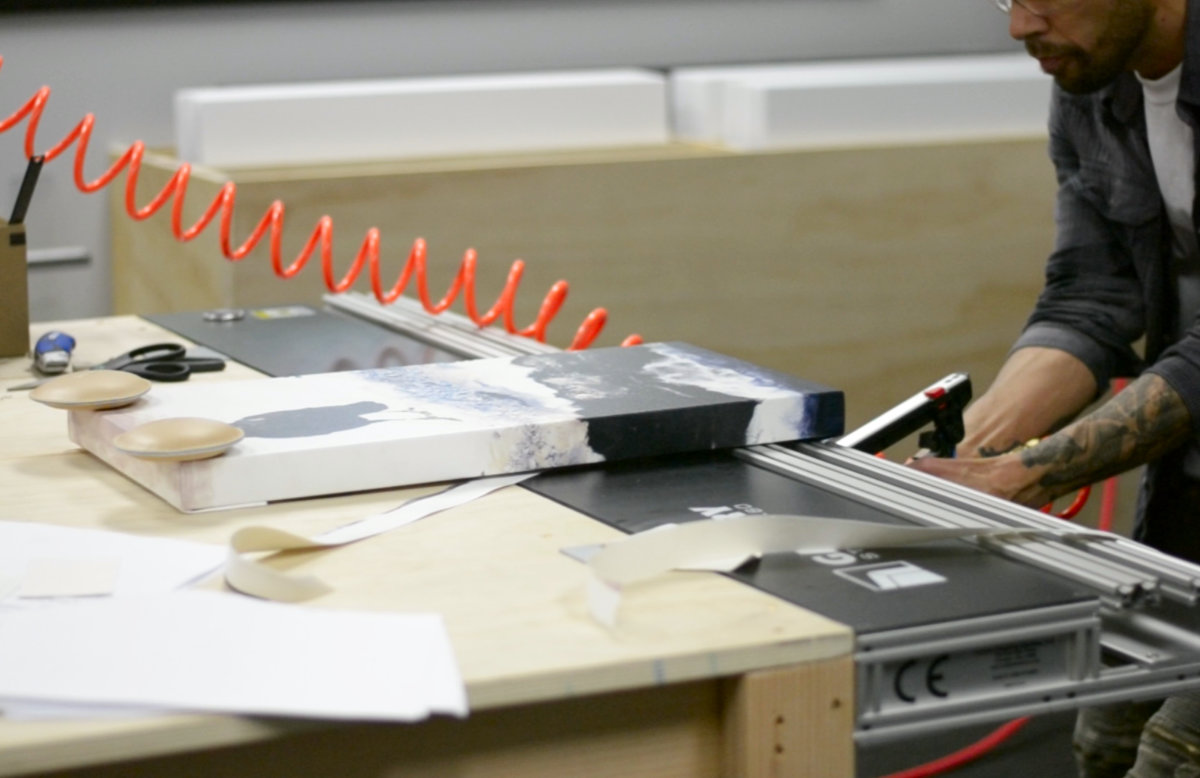
In some instances, stretching a canvas may not be the best option. If a canvas has been pulled off stretcher bars and was trimmed previously, there may not be enough spare edge left to re-stretch it without cropping into the art. There are also instances where the artist simply did not leave enough spare edge to properly wrap the canvas without cropping. In these situations, mounting a canvas on a foam board and then framing it is a good alternative. We can help assess which option is best for your art.
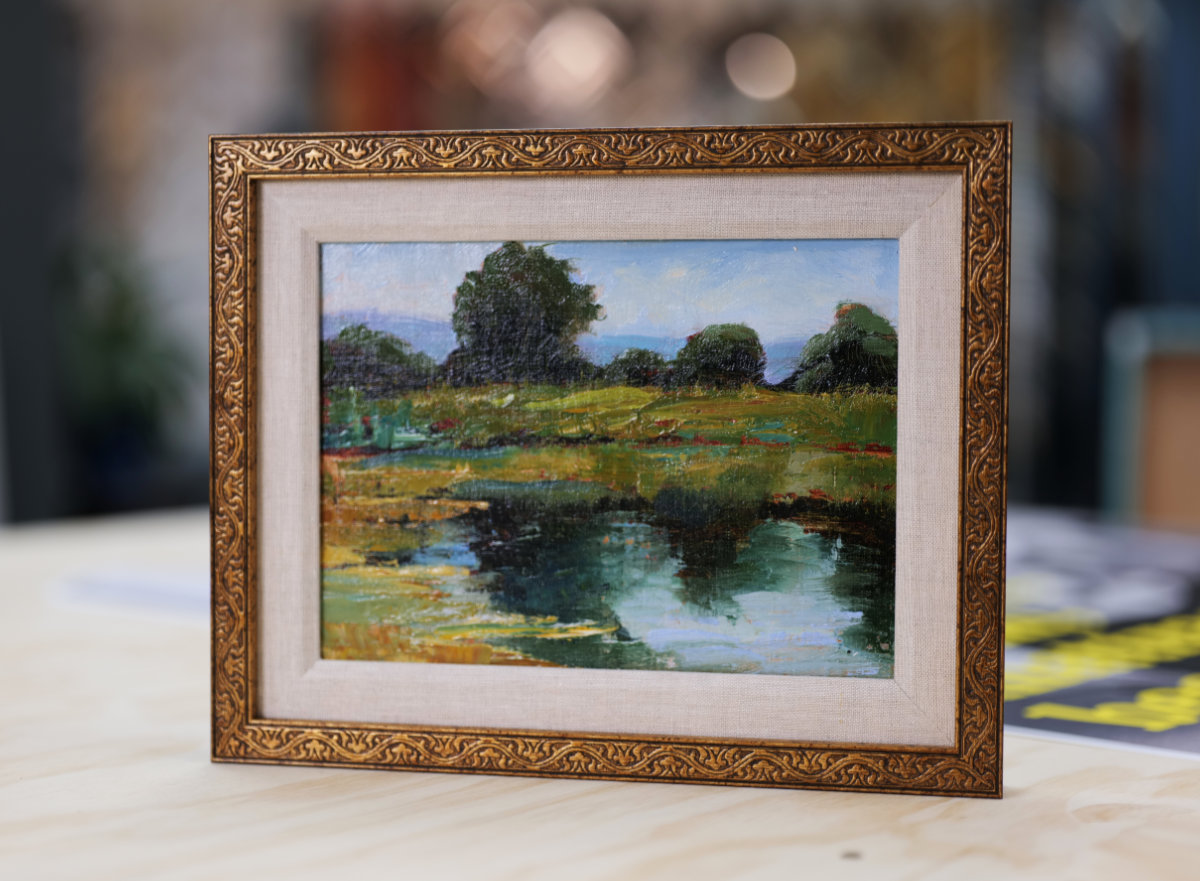
A popular way to display a mounted canvas in a regular frame is by adding a linen liner (a small fabric covered frame) between the outer frame and the canvas. The liner acts similarly to a matboard in a regular framing job. It creates a visual separation between the art and the frame. When done right, is very effective in enhancing the overall design.
Stretcher Bars & Depth Options
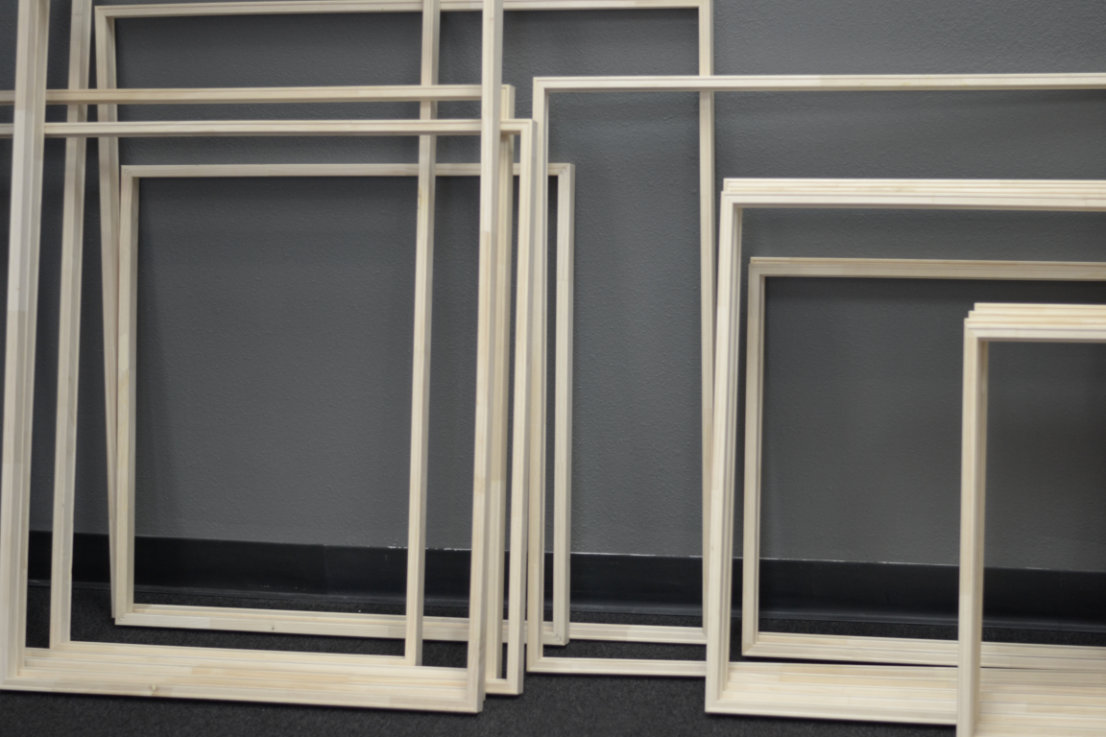
We custom cut stretcher bars to the exact size. We have several size options for stretchers. 1 1/2″ deep are the most common, which offer a great aesthetic on walls, and are also a great size for fitting in most floater frames. We also offer 1/2″, 3/4″, 1″, 2″, 2.5″ and 3″ depths.
Canvas Stretching FAQs
How much additional edge beyond the artwork is necessary for stretching a canvas?
We prefer to have at least 2″ in addition to the stretcher bar depth on each side. This is so we have something to grab with either our machine or canvas pliers, so that we can stretch the canvas tightly without wrinkles, and not run into problems. In other words, if you are using a 1 1/2″ stretcher bar, you would want 3 1/2″ beyond the face on each side.
Can you fix a warped or sagging canvas?
Usually, yes. But it depends how bad it is, and what is causing the issue. Sometimes canvases are not stretched evenly or with the correct amount of tension, resulting in sagging areas. Other times the painting itself may be causing the issue. We can assess and tell you what the underlying issue is. In some cases we can use a special technique which uses a small amount of heat and moisture to carefully relax the canvas and get it to re-tighten, without having to pull it off the bars. In other cases, it is necessary to remove it and re-stretch with new bars.
Can you re-stretch a canvas that was previously stretched, and make it look identical to how it was before?
That depends on how much extra edge is left on the canvas. Excess canvas is often trimmed off after it is stretched, reducing the amount of additional edge, which is essential for stretching. If this is the case, we will need to crop into the image in order to re-stretch it. If you don’t want to lose any of the image, an alternative is to have us mount the canvas on foam and frame it.
I bought a painting while on vacation overseas and brought it back rolled up. Can you stretch this?
Yes, we do this all the time. However, you should be aware of a few common issues. Paintings like this are often painted on stretchers that were not square to begin with, so it is often necessary to crop into the image because of inconsistent dimensions. Sometimes paintings from other countries are done on canvas that may not be made for art, such as bed sheets, curtains, or other types of spare fabric that have been gessoed over. This can create difficulty stretching if the material is not strong enough to pull properly without damage. Depending on how it was rolled can introduce issues as well, such as creasing and cracking. We will assess it and tell you what result to expect before starting.
How big a canvas can you stretch?
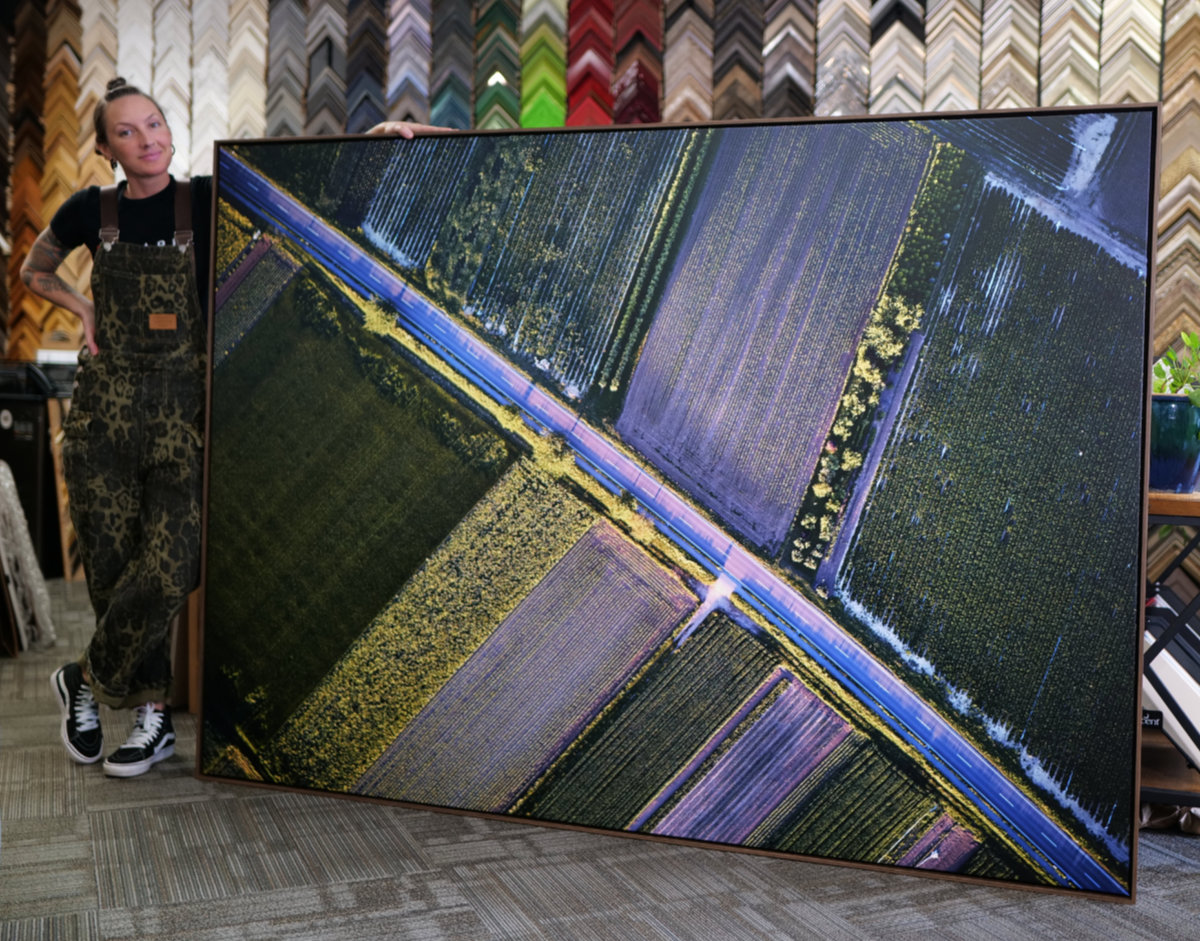
The longest stretcher bar available from our vendors is just under 10 feet. Once the edges are mitered in order to join it, a few inches are lost. Therefore, for most projects, the maximum size is roughly 9 1/2 feet. That being said, there have been some instances where we built canvases larger than 10 feet. In order to do that, we need to build custom stretcher bars from scratch. Keep in mind that there are logistical problems for extremely large canvases, such as getting through doorways and transporting them. Contact us for a quote if you have a special, oversize canvas project.
How much does canvas stretching cost?
Pricing depends on the canvas size and the stretcher bar size you choose. The larger the size, the more expensive it will be. We calculate by the square inch. Give us a call or stop in for a custom quote.
Once a canvas is stretched, how should I frame it?
There are several options. Here are the most popular ones:
1. Floater Frame
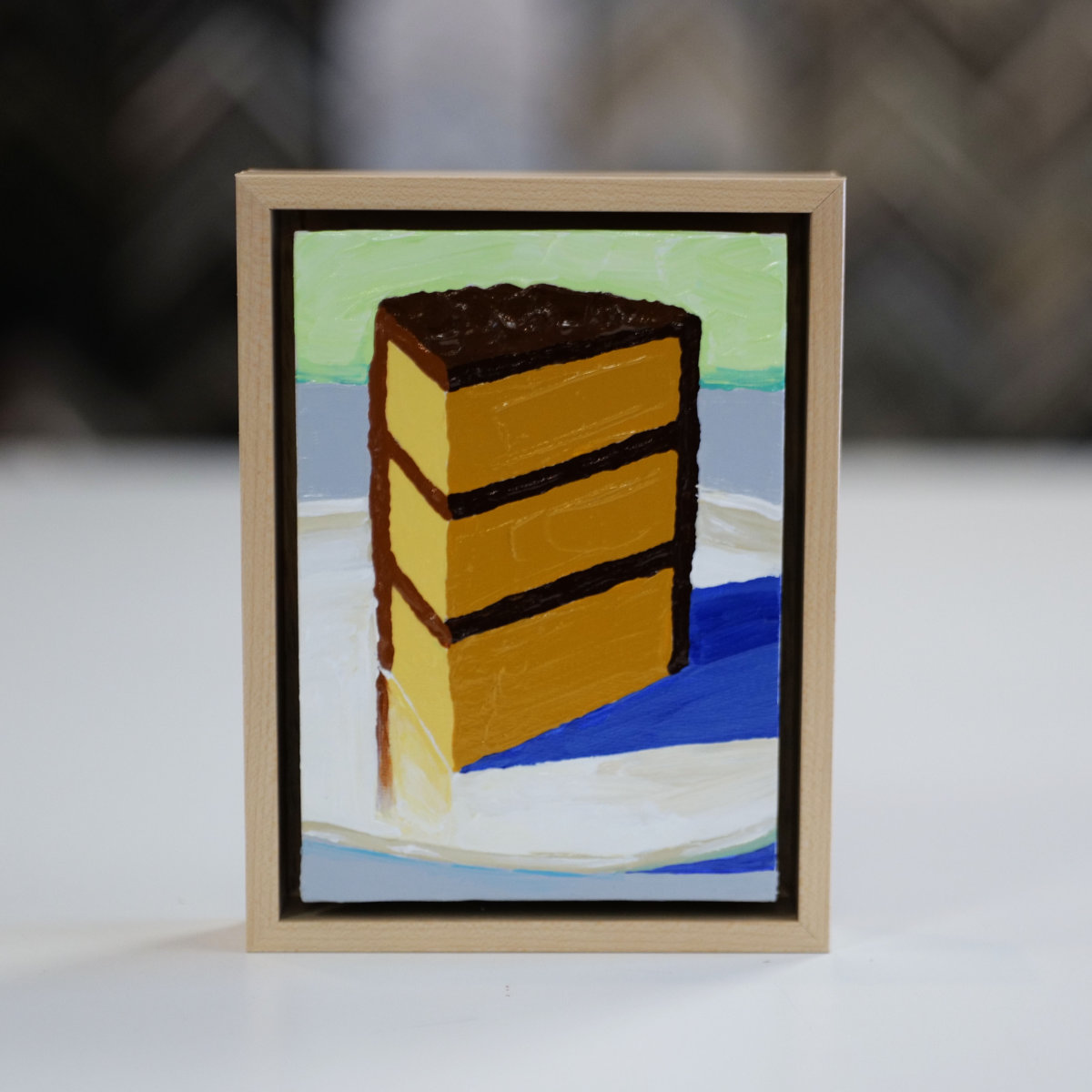
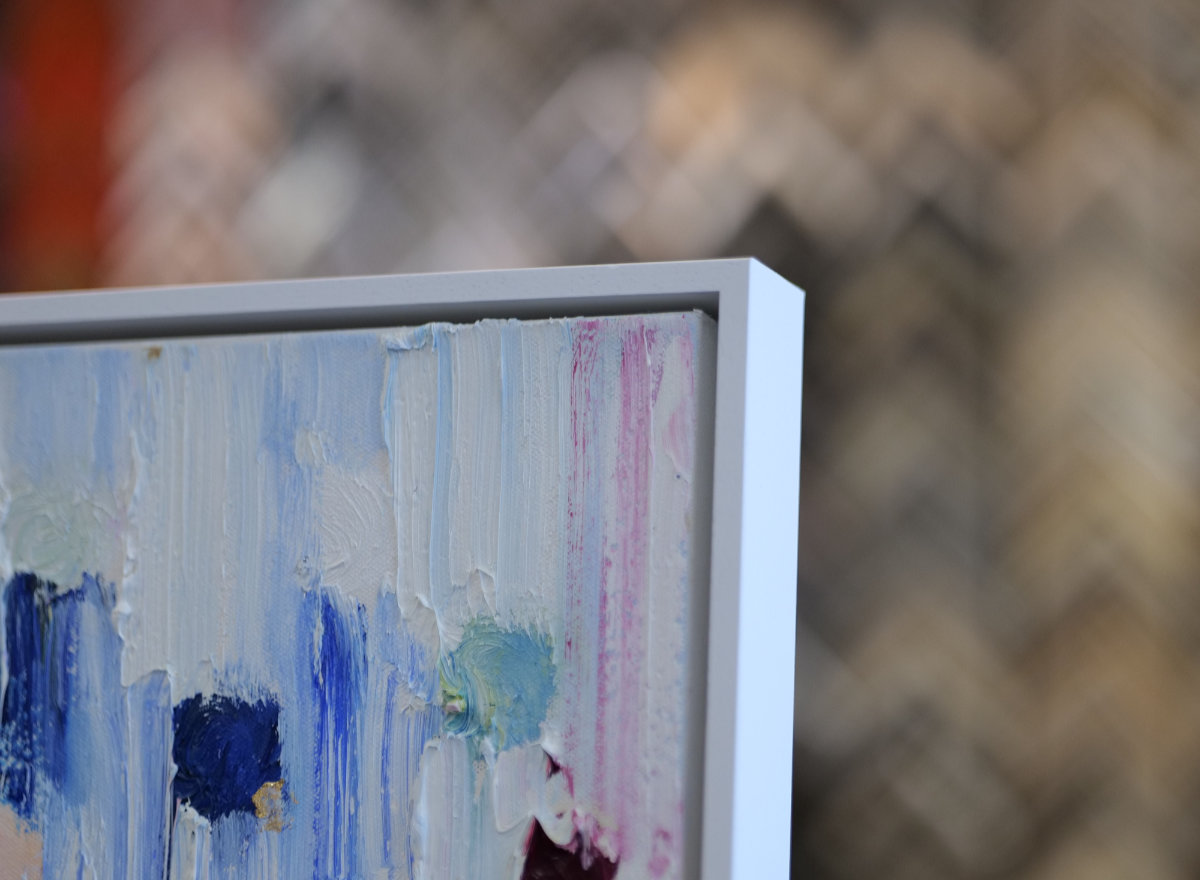
A floater frame surrounds the canvas without covering its edges. A small gap (typically 1/4″) is left between the edges of the canvas and the frame, which creates the illusion that the artwork is floating inside the frame. This is a very popular option that gives an elegant, contemporary look. Floater frames are available in many finishes, in various sizes.
- Can be either subtle or highly decorative.
- Best for: Contemporary paintings, gallery-style artwork, modern interiors.
- Advantages: Provides a finished presentation while preserving the visible canvas edges.
- Considerations: If a canvas was stretched somewhere else and was not properly done, it may not fit well in a floater.
2. Standard Frame
A conventional frame that is deep enough for housing the stretcher bar used can be fitted around a stretched canvas. In this case, the frame’s inner edge (rabbet) will slightly overlap the edges of the canvas.
- Can range from a simple narrow molding to an elaborate carved frame.
- Best for: Traditional paintings, portraits, landscapes, decorative artwork.
- Advantages: Huge variety of styles and finishes; can make artwork feel more substantial.
- Considerations: not every frame and canvas combination will work.
3. Linen Liner & Outer Frame
A linen liner is a fabric-covered inner frame placed between the canvas and an outer decorative frame. This look creates a visual transition between the artwork and the decorative frame, and can be a an effective way of enhancing the overall design.
- Generally associated with traditional oil paintings.
- Best for: Traditional paintings, portraits, landscapes, high-end presentation.
- Advantages: Elegant, dimensional, and visually separates the artwork from the outer frame.
- Considerations: The frame can visually compete with artwork if the molding is too elaborate.
4. No Frame
Sometimes not adding a frame at all is the preferred option. With a gallery wrap, the edges already look good, so a minimal approach is just fine. Hanging hardware can be added directly to the back of the stretcher bars.
- Gallery wrap, mirrored or solid color edge options.
- Best for: Contemporary artwork, photography, minimalist interiors.
- Advantages: Clean, modern, inexpensive, and lightweight.
- Considerations: Offers no additional protection to the canvas edges.
In addition to these, there are less common options, such as: mounting inside a shadow box (for a dramatic presentation), recessing a canvas in a floater frame (for a deeper architectural look), or mounting to panel and framing (for greater dimensional stability). Whatever you choose, we can do it. Our expert framing designers can walk you through the options and help you decide the best choice for your artwork.
Our Clients Include: